
KLAS Arch Collaborative Learning Summit 2026
The KLAS Arch Collaborative is a community that enables stakeholders from across the healthcare industry to identify and share best practices for training, supporting, and engaging clinicians to optimize their EHR experience. To promote collaboration between healthcare organizations, healthcare IT vendors, and professional services firms and support continual improvement, KLAS hosted the ninth annual Arch Collaborative Learning Summit in July 2026. 330 leaders from 106 organizations (83 health systems and 23 IT vendors/services firms) gathered to share their expertise and best practices via panels and presentations. This overview provides summaries of these discussions and insights (to view full presentations, click here).
Access the feedback of
700,000+ clinicians worldwide
Access the feedback of
700,000+ clinicians worldwide
Here is my information:
Save the Date: Arch Collaborative Learning Summit 2027
KLAS is excited to announce that the next Arch Collaborative Learning Summit will be July 13-15, 2027, in Salt Lake City, Utah. This event is for Arch Collaborative members only. Please reach out to your KLAS Engagement Partner for more information on the summit and how to register for the event.
Arch Collaborative Awards
During the summit, KLAS celebrated the 2026 Arch Collaborative Award winners, who are listed below. For more information on how to qualify for an EHR Experience Pinnacle Award or Breakthrough Recognition, click here.
EHR Experience Pinnacle Award Winners
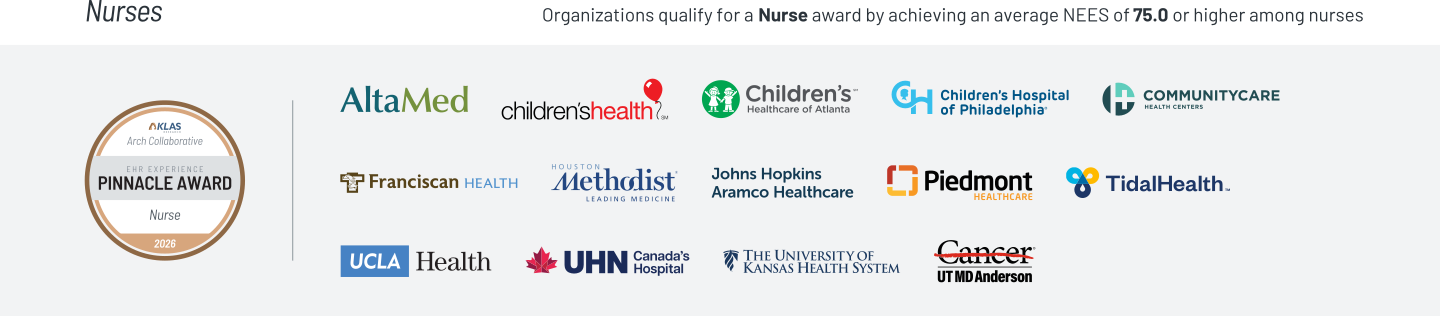
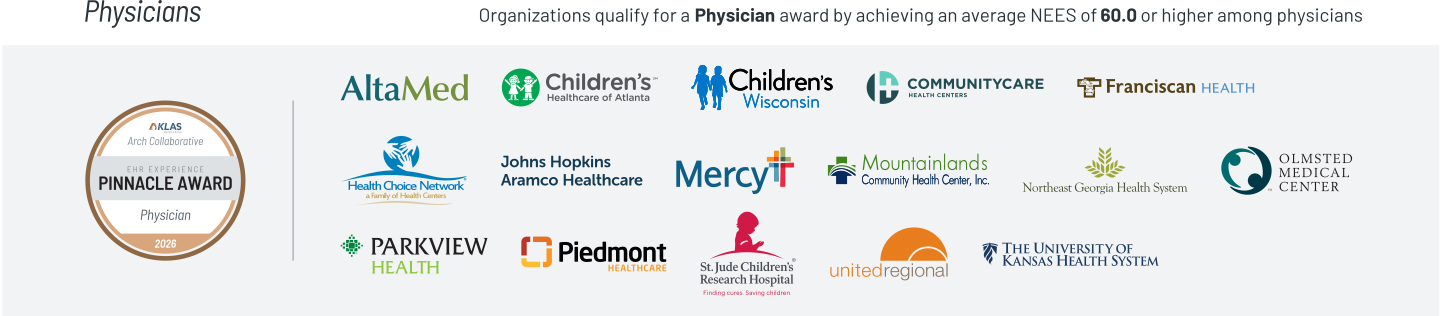
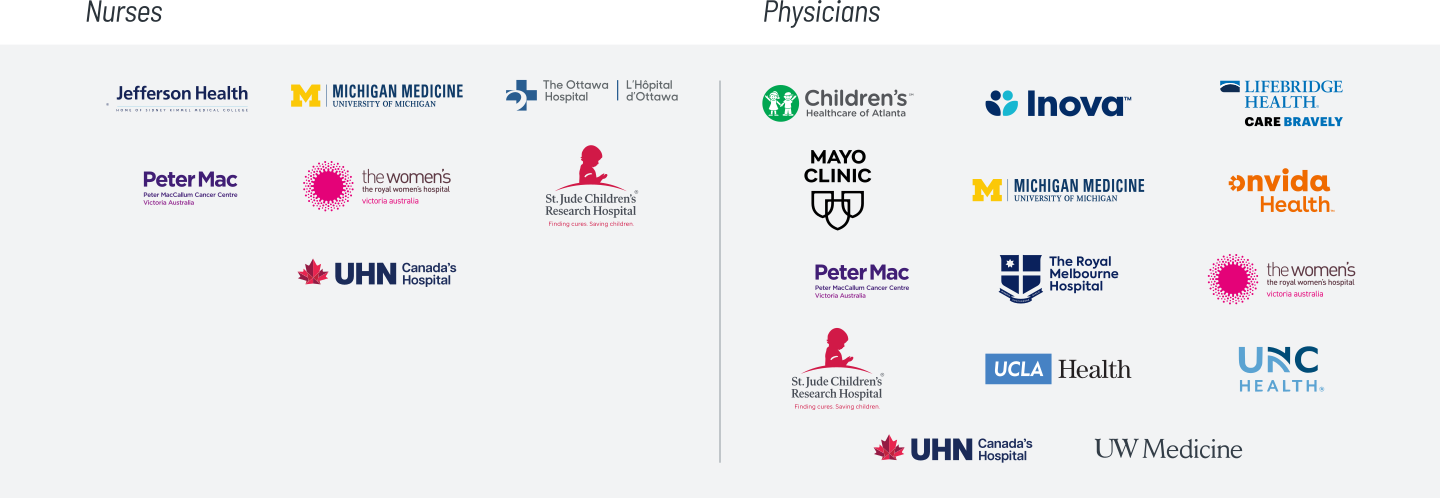
The EHR Experience Pinnacle Award is a celebration of achievement and is given to Arch Collaborative members whose Net EHR Experience Score (NEES)† for nurses or physicians has reached the required thresholds. KLAS congratulates the following 2026 award winners.
† Each individual clinician’s responses to the Arch Collaborative EHR Experience Survey regarding core factors such as the EHR’s efficiency, functionality, impact on care, and so on are aggregated into an overall Net EHR Experience Score (NEES), which represents a snapshot of the clinician’s overall satisfaction with the EHR environment at their organization. A NEES can range from -100 (all negative feedback) to 100 (all positive feedback).
EHR Experience Breakthrough Recognition Winners
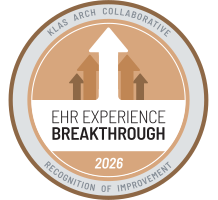
The EHR Experience Breakthrough Recognition is a celebration of improvement and is given to member organizations whose NEES (for physicians, nurses, or both) has increased by at least 15 points between measurements. Congratulations to the following organizations:
Summit Welcome & Keynotes
Click on the headers to access recordings of the presentations
Summit Welcome: Progress & Possibility
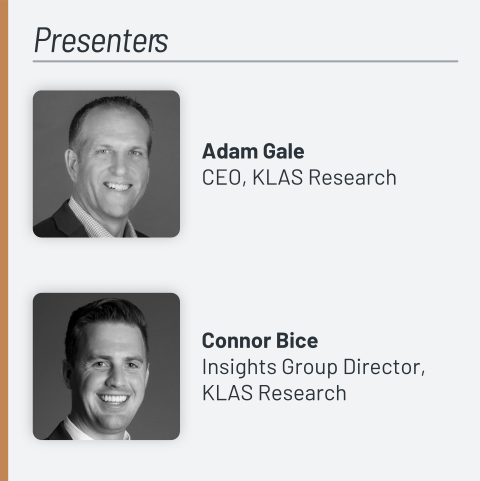
Setting the stage for the 2026 Arch Collaborative Learning Summit, Adam discussed the Art of the Possible and how transformation begins with measuring what matters. He explained that change comes after the measurement, and improvement comes after the baseline. While financial ROI is one critical way of measuring success, improved quality, efficiency, job satisfaction, and even the ability to track progress are also important considerations when tracking progress. Organizations are experiencing large improvements in their Net EHR Experience Scores as they follow the principles from the Arch Collaborative, including EHR education, ongoing optimization, and process improvement measurement cycles. Candid measurement, followed by sustained action on feedback turns ambitious improvement goals into measurable gains.
Connor Bice continued the welcome session by sharing that 2025 was the busiest year in the history of the Arch Collaborative—with 113 participating health systems and more than 150,000 respondents. The data showed sharp gains in EHR satisfaction, led by a record 21-point improvement among physicians. Clinicians linked much of the progress to easier documentation, supported by AI and ambient note tools, templates, and macros. EHR efficiency is now a less common burnout contributor, though burnout has edged up among advanced practice providers and concerns about chaotic workplaces, teamwork, shared values, workload control, and aggressive patients remain. The broader message is that technology alone does not remove friction: organizations should listen regularly to clinician voices, turn that feedback into practical changes, strengthen education and trust, reduce duplicate documentation, and use experience benchmarks to set improvement goals.
Keynote Address: From Burnout to Belief & Belief to Action
Reid Health transformed their clinician EHR experience by rebuilding trust, strengthening clinical governance, and creating a culture where clinicians help shape technology and workflows. Attendees were shown how education, personalization, measurement, and human-centered AI adoption can improve clinician well-being, drive meaningful adoption, and turn technology into a tool for sustainable change.
Keynote Address: Reading the River
University of Vermont Health transformed their EHR experience through data-driven improvement, trust-building, and thoughtful change leadership. The presenter discussed how listening to clinicians, addressing the human side of change, building strong teams, and combining the “what” of change management with the “why” of leadership can create lasting organizational improvement.
Keynote Address: The Art of Recognition in Healthcare IT
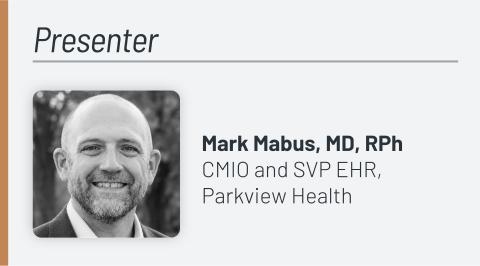
Parkview Health uses recognition as a tool to reinforce meaningful improvement rather than simply celebrating awards. Participants learned how clinician feedback, creative training, team recognition, and measurable outcomes can reduce friction, build trust, and drive greater value from healthcare technology.
The Heart of Healthcare: Your Voice, Our Thanks
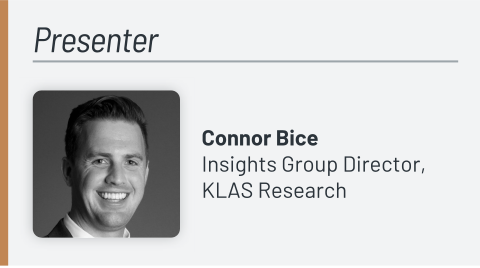
Participants celebrated the healthcare IT leaders whose insight, honesty, and partnership help shape the future of KLAS content. Connor thanked everyone for the perspective they bring to the KLAS community and invited feedback on how we can make our content, reports, and resources even more useful to healthcare organizations. Attendees shared their thoughts in a brief, collaborative discussion and let KLAS honor them as partners in transparency, improvement, and transformation.
Panel: Beyond the Press Release—The Realities of Merging Health Systems
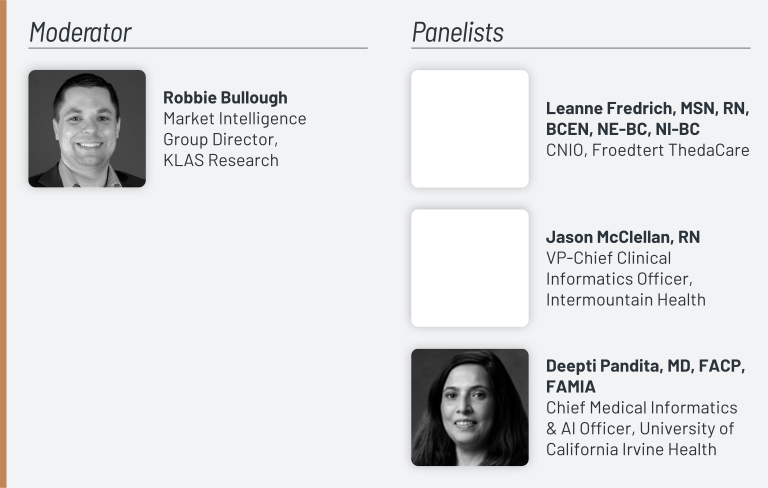
This discussion explored the realities of health system mergers beyond the initial announcement, including the challenges of bringing people, processes, cultures, and technology together. Panelists shared perspectives and lessons learned on navigating integration, building alignment, maintaining trust, and creating a unified organization.
Panel: Nursing AI
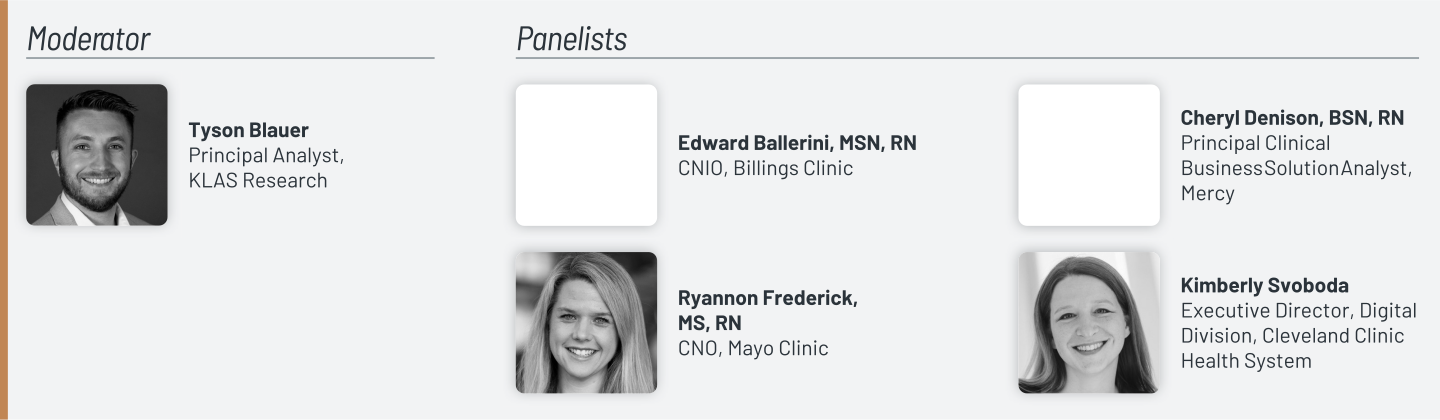
This panel discussed how AI can support nursing workflows, what it takes to build trust and adoption among nurses, and how organizations should measure success. Panelists shared practical lessons on governance, change management, ROI, workforce support, and patient safety.
Topic-Based Presentations
Click on the headers to access recordings of the presentations
Summaries of the summit’s other presentations are given below, arranged by the following topics:
- Leveraging AI in Healthcare
- EHR Education & Adoption
- EHR Governance & Shared Ownership
- EHR Optimization & Change Management
Leveraging AI in Healthcare
Beacon Health System: Developing an AI-Enabled Organization
Beacon Health System is building an AI-enabled organization through executive leadership, clear governance, and practical adoption strategies. The presenters explained how responsible AI can scale across healthcare operations while supporting safety, trust, and real-world impact.
Children’s Health: From Burden to Bedside—A Nursing-Led Approach to Reducing Documentation Workload
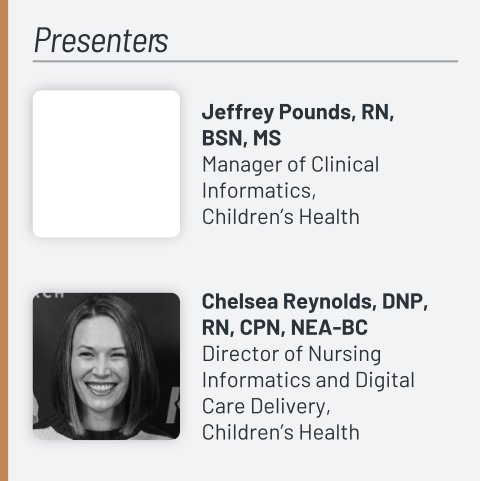
Nurses consistently identify documentation burden as a barrier to efficient workflow and meaningful patient care. This session highlighted a nursing-led, governance-driven approach to reducing documentation burden while building alignment across interdisciplinary stakeholders. Children’s Health presenters shared how nursing leadership partnered with informatics, operations, and clinical teams to prioritize and implement targeted solutions, including Project RED optimization, flowsheet macros, copy-forward functionality, and emerging AI tools such as the AI end of shift summary. Attendees learned strategies to engage frontline nurses, translate feedback into actionable improvements, and secure organizational buy-in while thoughtfully adopting technologies that improve workflow, support usability and safety, and enhance nurse well-being.
CommonSpirit Health & Abridge: One Team, One Mission—How CommonSpirit Health & Abridge Built a Scalable Ambient AI Program Across Five Regions & Two EHRs
This session examined the partnership between CommonSpirit Health and Abridge. The presenters explained that CommonSpirit Health and Abridge built a true partnership, operating as one team with a shared north star: empowering physicians with ambient AI to improve their wellbeing and, in turn, their efficiency, productivity, and ability to deliver the best possible patient care. They reached this goal through a shared definition of success, a customized scale strategy, a complete engagement and adoption engine, and a comprehensive communications infrastructure. The result is a model for what it looks like when a vendor and a health system commit to building the foundation needed to achieve their shared mission: improved clinician wellbeing.
Corewell Health: From Documentation to Narration—Transforming Nursing Practice with Ambient Listening
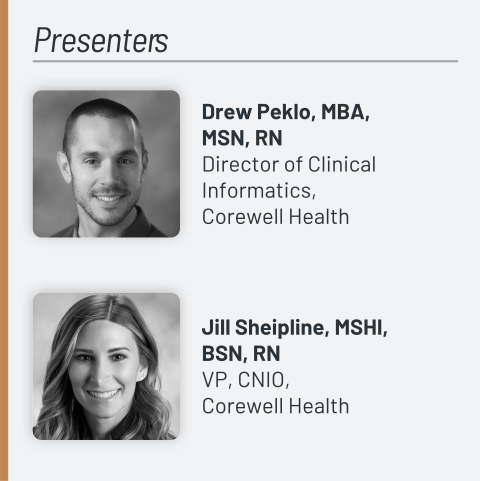
Corewell Health implemented ambient listening technology to address one of the most persistent challenges in nursing: documentation burden. While early results demonstrated improvements in efficiency and time savings, the most meaningful impact came from transforming how nurses practice, not simply introducing a new tool. Attendees gained practical insights into how to prepare nursing teams for this change, integrate ambient workflows into daily practice, and sustain adoption beyond the initial go-live. Rather than presenting ambient documentation as a technology solution alone, this session reframed it as a catalyst for workflow redesign, supported by data-driven validation, enabling nurses to reclaim time at the bedside while improving both clinician and patient experience.
Fairview & Nabla: Scaling Ambient AI Beyond the Clinic—Enterprise EHR Transformation Across Specialties and Roles
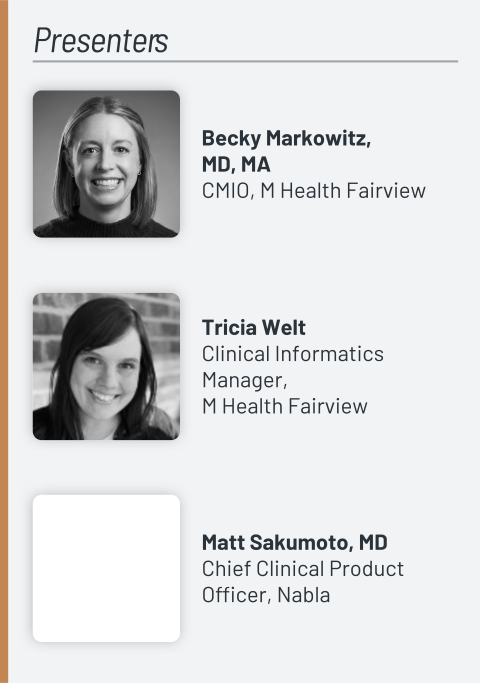
This session presented the partnership between M Health Fairview and Nabla to improve clinicians’ EHR experience through a structured, co-developed approach to ambient AI and dictation adoption across inpatient and ambulatory settings. Rather than deploying a standalone tool, the organizations worked together to embed ambient documentation into real-world workflows spanning hospitalists, emergency providers and nurses, cardiology, ambulatory nurses, care management, clinical pharmacy, and inpatient and outpatient rehabilitation. Together, M Health Fairview and Nabla demonstrated that improving EHR experience at scale requires more than technology. It requires shared governance, clinical leadership, measurable outcomes tracking, and a repeatable mode that translates AI capability into trusted, specialty-specific practice.
St. Luke’s Health System & Ambience Healthcare: Beyond Ambient—How St. Luke’s Leveraged an Enterprise AI Platform to Transform the Epic EHR Experience
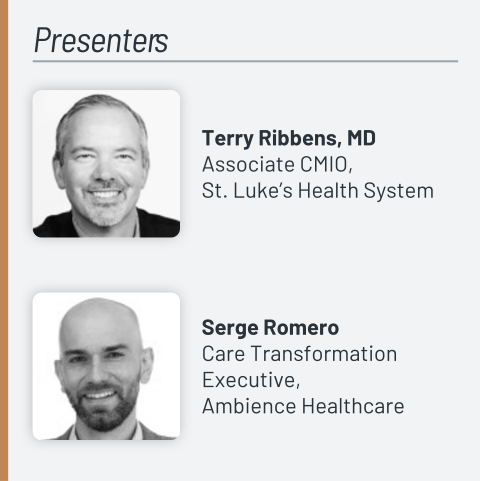
St. Luke’s Health System and Ambience Healthcare partnered to move from ambient documentation to an enterprise clinical AI platform that measurably improves the EHR experience. This session showed how clinician co-design, Epic-integrated workflows, and continuous change management drove ambulatory adoption and KLAS-validated outcomes, and how St. Luke’s is now extending the platform across additional capabilities and care settings, including inpatient.
University of Iowa Health Care & Evidently: AI That Scales—Moving the Needle on Provider Well-Being, Quality Improvement & Revenue Integrity with Clinical Data Intelligence
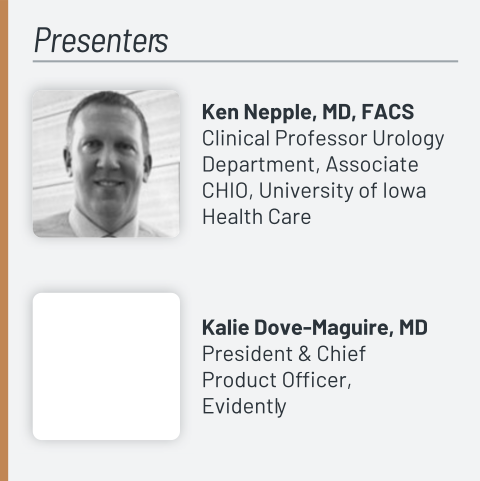
The University of Iowa Health Care and Evidently partnered in deploying and evolving an AI-powered clinical data intelligence system—progressing from a pilot to enterprise-wide implementation, and then showing measurable dramatic improvements in provider wellbeing, quality improvement, and revenue integrity. The University of Iowa Health Care worked with Evidently using a clinical data intelligence system to surface the right information to the right person at the right time. What is unique about this partnership is the scale and rigor of the implementation, as University of Iowa Health Care represents one of the ?rst academic medical systems to deploy AI clinical data intelligence at an enterprise level. This has generated insights on successful clinician adoption and efficient work?ow integration and has had a measurable impact on the EHR experience.
EHR Education & Adoption
Emplify Health & uPerform: Project Fusion—Scalable Education Strategies for Epic Consolidations
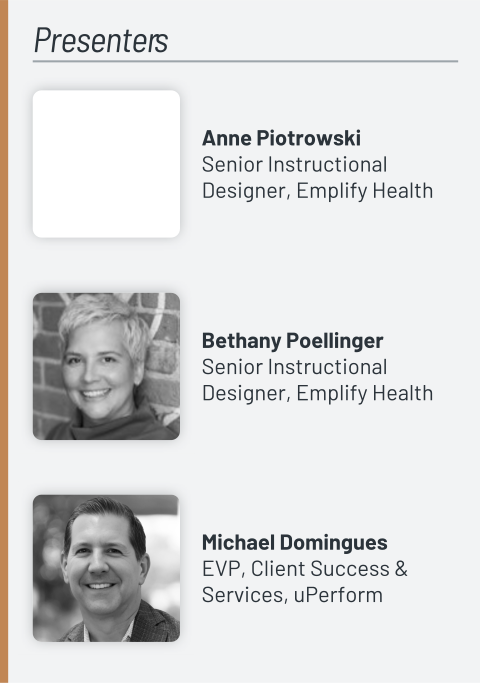
When Gundersen and Bellin merged to form Emplify Health, they faced a defining challenge: unify EHR education for 14,000+ employees during an Epic consolidation project—two training cultures, one deadline. This session explored how a blended, workflow-embedded learning strategy scaled enterprise-wide during Project Fusion and what outcomes are achieved when education, informatics, and EHR experience data are aligned.
Memorial Hermann Health System & CSI Companies: Accelerating Provider Adoption Through Personalization & Data-Driven Support
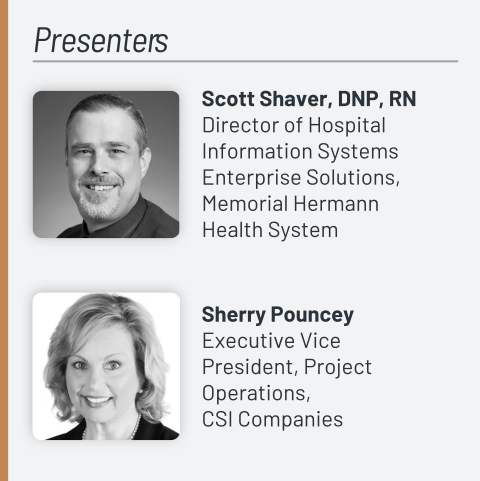
In partnership with Memorial Hermann, CSI Companies implemented a provider-centered adoption model designed to accelerate Epic proficiency while enhancing the provider experience. Moving beyond a traditional at-the-elbow approach, the program combined dedicated support spaces, a dual support model, and highly personalized workflow optimization sessions.
VCU Health System & Amplifire: Fast-Tracking Adaptive Learning & Bringing EHR Onboarding Home
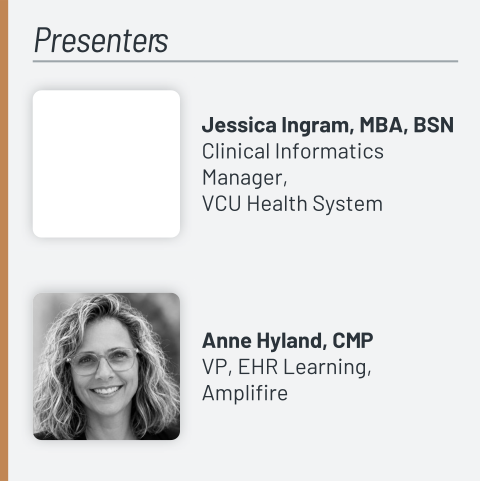
VCU Health System decided to transition the highest volume of their Epic training in-house and leveraged Amplifire as the cornerstone of their training strategy for this shift. This presentation covered how the health system rapidly stood up three dozen courses in Amplifire over three phases, and it examines the measured impact, ROI, and success of their decision to move in-house with Amplifire.
EHR Governance & Shared Ownership
Children’s Hospital of Philadelphia: Reaching the Pinnacle—Nurse Driven Informatics in Action
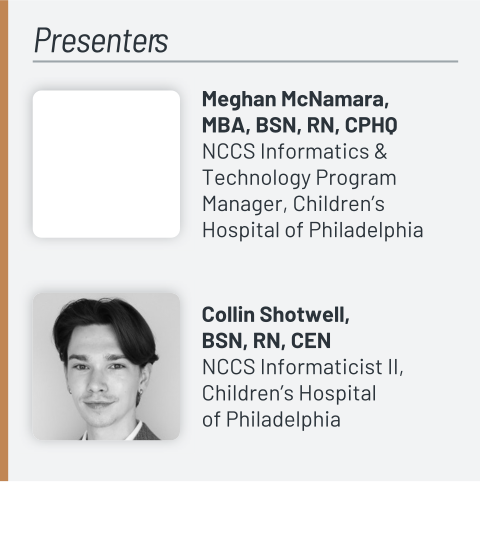
Children’s Hospital of Philadelphia (CHOP) transformed their informatics ecosystem into a coordinated, nurse-led governance model that drives continuous EHR optimization through strong partnership with Digital Technology Services (DTS) and executive leadership. Faced with structures that could no longer support the growing complexity of clinical technology, CHOP applied a structure–process–outcomes approach to redesign their model around frontline engagement and organizational alignment. At the center was the NCCS Informatics Council, a multidisciplinary governance body embedded within professional governance. Standardized processes, including informatics office hours, clinical documentation standards, and council validation, created a closed-loop system to translate frontline feedback into scalable solutions. These efforts resulted in sustained improvements in clinician experience and repeated KLAS Pinnacle Award recognition, reflecting a durable, partnership-driven model for EHR excellence.
CommUnityCare Health Centers: From Insight to Impact—Leveraging the KLAS Arch Collaborative for Continuous EHR Improvement
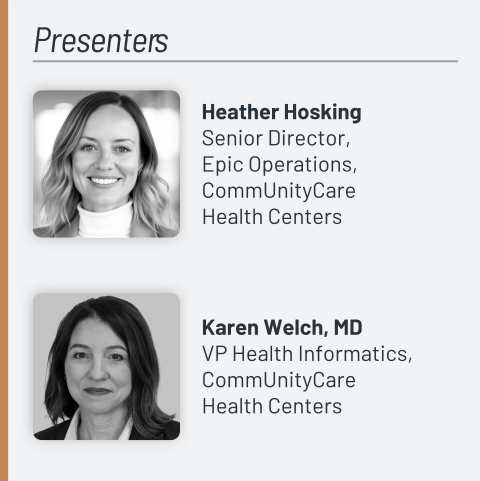
Drawing on real-world application, this session highlighted how KLAS Arch Collaborative benchmarking and survey data can be used to inform executive decision-making, prioritize resource allocation, and align investments with the areas of greatest impact. Attendees gained practical strategies for using data not only to identify gaps but to guide structured, accountable improvement efforts across the organization. A key focus was the role of multidisciplinary operational ownership in sustaining progress. The presentation outlined how aligning leadership across clinical, operational, training, and informatics domains fosters shared accountability, accelerates decision-making, and ensures that improvements are both meaningful and durable. Finally, the session demonstrated how KLAS Arch Collaborative surveys can serve as a continuous improvement engine—moving beyond measurement to become a catalyst for organizational listening, engagement, and iterative refinement. Participants left with a clear understanding of how to translate insight into impact through a scalable and repeatable improvement model.
Northeast Georgia Health System: From Trust to Traction—Building Net EHR Experience Score (NEES) Through Clinician-Led Informatics
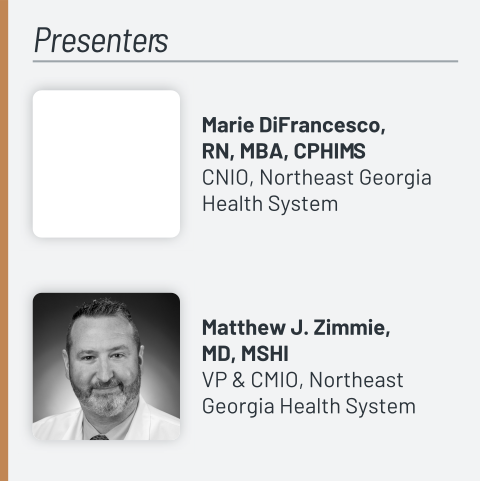
Organizations across healthcare are striving to improve the clinician experience, yet many struggle to achieve durable results. This presentation reframed the NEES not as an IT metric or technology problem but as an outcome of culture, governance, reliability, and clinician leadership. Drawing from Northeast Georgia Health System’s experience as a CHIME Digital Health Most Wired Level 10 organization, this session explored the foundational behaviors that enabled success across physicians, advanced practice providers, and nurses. The presenters shared how clinician-led governance, sustained reliability, deep nursing engagement, and disciplined “go and see” practices built trust that translated into measurable traction. The session also addressed the role of innovation and generative AI, emphasizing why advanced tools only deliver value when layered onto trusted workflows and mature governance structures. Participants left with a clear mental model and practical, replicable approaches for strengthening clinician trust, aligning leadership, and creating the conditions for sustainable NEES improvement, regardless of organizational size or technology stack.
Northfield Hospital & Clinics & MEDITECH: From Feedback to Frontline Power—Building Shared Ownership in the EHR Experience
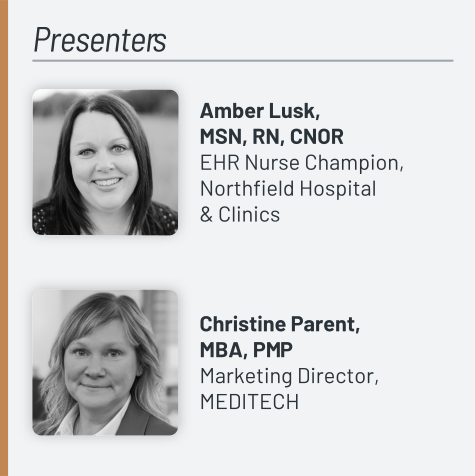
Northfield Hospital & Clinics transformed clinician feedback from the KLAS Arch Collaborative Pulse Survey into a measurable program focused on engagement, governance, communication, and sustained improvement in the clinician experience. Northfield Hospital & Clinic built a multidisciplinary governance model anchored by an executive-level Expanse Experience team to ensure frontline clinician voices directly informed decision-making and optimization priorities. Equally important was the collaborative relationship with their EHR vendor, creating a shared commitment to success through ongoing guidance, optimization support, and adoption of industry best practices. Over time, EHR improvement shifted from being viewed as an IT-led initiative to a shared organizational responsibility supported by a vendor partnership. This session highlighted practical strategies for operationalizing governance frameworks that support collaboration, transparency, and clinician engagement. The session also showcased how creative communication tactics, such as frontline staff rounding, targeted newsletters, intranet updates, and lock-screen messaging, helped transform clinician perceptions of the EHR, reinforce shared ownership, and reposition IT as a trusted partner in continuous improvement efforts.
EHR Optimization & Change Management
HonorHealth: Epic Installs at Warp Speed—Accelerating Implementation Without Sacrificing Quality
Healthcare organizations are increasingly challenged to deploy Epic and other EHR platforms on compressed timelines driven by mergers, acquisitions, regulatory pressures, and strategic transformation initiatives. This presentation outlined a structured approach to achieving “warp-speed” implementations without compromising patient safety, clinician experience, or system performance. Dr. Craig Norquist and Candice Larson, RN, shared real-world insights into how strong governance, disciplined program management, and clinical informatics leadership are essential to success. The session highlighted critical components such as executive alignment, standardized build approaches, workflow optimization, and proactive change management. Presenters also discussed common pitfalls encountered during accelerated timelines, including resource constraints, training limitations, and burnout risks, and provided actionable strategies to mitigate these challenges. Emphasis was placed on maintaining clinician engagement and ensuring adoption through targeted communication, efficient training models, and robust support structures.
Memorial Hermann Health System & Nordic: Building Efficiency Through Change Management
Memorial Hermann Health System (MHHS) partnered with Nordic during a large-scale EHR implementation to deliver a comprehensive, clinician-centered change management strategy designed to accelerate adoption, maximize utilization and proficiency, and safeguard MHHS’s reputation for well-managed change. From the outset, Nordic operated as an extension of the MHHS project team, aligning strategy, governance, and execution to MHHS culture, scale, and clinical realities. The engagement emphasized co-creation rather than dependency, building internal capability while delivering long-term sustainable results. The initiative delivered a comprehensive, enterprise-wide change management and readiness program supported by strong governance, embedded change management methodology, and a structured stakeholder engagement project plan. Through strong leadership and a best practice change management approach, MHHS achieved successful enterprise-wide EHR adoption while maintaining patient safety, clinician confidence, and operational stability. The initiative delivered measurable results, created a scalable change model, and produced repeatable learnings that continue to enhance the clinician EHR experience and support future transformation efforts.
Michigan Medicine: Three Instances, Two Awards, One Direction—No Single Silver Bullet: Foundation to Rooftop, Strengthening the Whole House in a Complex Health System
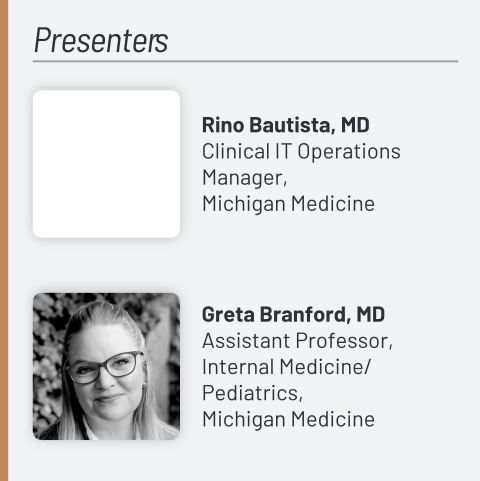
This presentation discussed how to apply the KLAS Arch Collaborative as a strategic leadership instrument—not just a benchmarking tool—to drive EHR decisions across complex, multi-entity health systems. The presenters showed how to distinguish between nurse and provider EHR experience drivers and select role-appropriate interventions that address the distinct pain points of each clinical group. This session also covered how to implement a governance-before-deployment framework for scaling emerging AI tools, including ambient documentation, and recognize when EHR satisfaction and clinician burnout have decoupled and articulate the organizational factors (such as staffing, workload, and environment) that EHR optimization alone cannot address. Participants left with the ability to adopt at least one transferable improvement model (i.e., clinician-driven optimization requests, nursing informatics intentional rounding, or internal benchmarking) for use in their own organization.
The University of Kansas Health System: A Road Map to Physician & APP Optimization in the Setting of Integration
This presentation was an overview of an approach to learning and development as well as optimization for a large-scale integration of a community health system into an academic health system. This session shared initiatives on physician and APP satisfaction and well-being and presented data and metrics that support this approach.
Other Sessions
Organization Size Breakouts
Facilitated by KLAS, these breakout discussions connected organizations from similar care settings to share challenges and approaches.
1– 500 Beds
| Challenges identified | Likely sources of challenges | Potential strategies | Metrics for measuring progress |
|---|---|---|---|
|
|
|
|
501 –1,000 Beds
| Challenges identified | Likely sources of challenges | Potential strategies | Metrics for measuring progress |
|---|---|---|---|
|
|
|
|
1,001–1,500 Beds
| Challenges identified | Likely sources of challenges | Potential strategies | Metrics for measuring progress |
|---|---|---|---|
|
|
|
|
1,501–2,500 Beds
| Challenges identified | Likely sources of challenges | Potential strategies | Metrics for measuring progress |
|---|---|---|---|
|
|
|
|
2,501+ Beds
| Challenges identified | Likely sources of challenges | Potential strategies | Metrics for measuring progress |
|---|---|---|---|
|
|
|
|
Ambulatory Care Organizations/FQHCs
| Challenges identified | Likely sources of challenges | Potential strategies | Metrics for measuring progress |
|---|---|---|---|
|
|
|
|
Children’s Hospitals
| Challenges identified | Likely sources of challenges | Potential strategies | Metrics for measuring progress |
|---|---|---|---|
|
|
|
|
Summit Attendees
Healthcare Organizations
Alberta Health Services/Health Shared Services
Allegheny Health Network (AHN)
Alliance of Chicago Community Health Services
AltaMed Health Services
Beacon Health System
Billings Clinic-Logan Health
CentraCare Health System
Children’s Health
Children’s Healthcare of Atlanta (CHOA)
Children’s Hospital of Philadelphia (CHOP)
Children’s National Hospital
Children’s Wisconsin
Cleveland Clinic
Community Health Care Association of New York State (CHCANYS)
CommUnityCare Health Centers
Cone Health
Cook Children’s Health Care System
Corewell Health—West Michigan (formerly Spectrum Health)
Dayton Children’s Hospital
Emory Healthcare
Emplify Health
Ethical Healthcare Limited
Franciscan Health
The Froedtert & the Medical College of Wisconsin
Geisinger Health System
Health Choice Network
HealthLinc
The Health Management Academy
HonorHealth
Houston Methodist
Intermountain Health
Kaiser Permanente Northern California
Kaiser Washington/Colorado
Kettering Health
LCMC
LifeBridge Health
M Health Fairview (Fairview Health Services)
Mayo Clinic
Memorial Hermann Health System
Mercy Health
Michigan Medicine
Morris Hospital & Healthcare Center
MultiCare Health System
Northeast Georgia Health System
Northern Arizona Healthcare
Northfield Hospital & Clinics
OCHIN
Ochsner
Ohio County Hospital
Olmsted Medical Center
Onvida Health
Optum
OSF Healthcare System
OU Health
Parkview Health
Piedmont Healthcare
Providence St. Joseph Health
Rady Children’s Health
Reid Health
Risant Health
Sauk Prairie Healthcare
SEARHC—SouthEast Alaska Regional Health Consortium
Southern Illinois Healthcare
St. Jude Children’s Research Hospital
St. Luke’s Health System
SUNY Upstate Medical University
TidalHealth
UCI Medical Center
UCSF Health
United Regional Health Care System
University of Iowa
University of Kansas Health System
University of Texas MD Anderson Cancer Center
University of Utah Health
University of Vermont Health Network
UNM Health
UTHealth San Antonio
UVA Health System
UW Health
VCU Health System
Vendors/Service Firms
314e
Abridge
Amazon/AWS
Ambience Healthcare
Amplifire
CSI Companies
Ellit Groups
Epic
Evidently
Goliath Technologies
Heidi Health
JustAskEvie
MEDITECH
MedPower
Nabla
Nordic
Oracle Health
Softek Solutions
Suki
Tegria
uPerform
Healthcare Associations & Media
ANIA
Healthcare IT Today
HIMSS
What Is the KLAS Arch Collaborative?
The Arch Collaborative is a group of healthcare organizations committed to improving the EHR experience through standardized surveys and benchmarking. To date, over 300 healthcare organizations have surveyed their end users and over 750,000 clinicians have responded. Reports such as this one seek to synthesize the feedback from these clinicians into actionable insights that organizations can use to revolutionize patient care by unlocking the potential of the EHR.
Report Non-Public HTML Body
Report Public HTML Body
Featured in Learning Track
Topics
Report Topics
Ambient Speech, Burnout Reduction & Clinician Wellness, EHR Governance, EHR Implementation, EHR Personalization, Measured Improvement, Onboarding EHR Education, Ongoing EHR EducationThis material is copyrighted. Any organization gaining unauthorized access to this report will be liable to compensate KLAS for the full retail price. Please see the KLAS DATA USE POLICY for information regarding use of this report. © 2019 KLAS Research, LLC. All Rights Reserved. NOTE: Performance scores may change significantly when including newly interviewed provider organizations, especially when added to a smaller sample size like in emerging markets with a small number of live clients. The findings presented are not meant to be conclusive data for an entire client base.